In an increasingly connected world, sharing your location has become as fundamental as sending a text. From coordinating a meetup with friends to ensuring loved ones are safe, or even just tracking that delivery, location-sharing apps keep us connected and informed. So, when your Troubleshooting Specific Location-Sharing Apps becomes a necessity because they stop working, it's not just an inconvenience—it can cause real confusion, delays, or even anxiety. You tap "Share Live Location," and… nothing. Or worse, it’s completely inaccurate. What gives?
Often, the problem isn't a broken app, but a tangle of settings, connectivity quirks, or background processes battling for your phone's attention. Let���s unravel these issues together, turning frustration into a functional fix.
At a Glance: Your Quick Fix Cheat Sheet
- Start with the basics: Restart your phone, toggle Airplane Mode, and check Wi-Fi/Mobile Data. Seriously, these often work.
- Permissions are paramount: Every app needs explicit permission to access your location. Double-check device and app-specific settings.
- Battery Saver vs. Location: Aggressive battery optimization often sacrifices background location updates. Adjust these settings for critical apps.
- Keep everything updated: Outdated apps or operating systems are frequent culprits for glitches.
- Know your app: While universal steps help, some apps have unique fixes for their specific quirks (e.g., Google Maps calibration, Life360 auto-start).
- Connectivity is key: GPS works best outdoors, but Wi-Fi and cellular data significantly improve accuracy and real-time updates.
The Root Causes: Why Location Sharing Fails
Before we dive into the fixes, it helps to understand why your location might not be sharing accurately or at all. Think of your smartphone as a mini-orchestra, with GPS, Wi-Fi, cellular data, and various apps all playing a part in pinpointing your whereabouts. When one instrument is out of tune, the whole performance suffers. Common reasons include:
- Misconfigured Settings: The most frequent culprit. Permissions might be off, location services disabled, or privacy settings too restrictive.
- Connectivity Problems: GPS needs a clear view of the sky, but phones heavily rely on Wi-Fi and mobile data for faster, more accurate triangulation, especially indoors. A weak signal means weak location data.
- Software Glitches or Bugs: Sometimes, an app or your phone's operating system just has a temporary hiccup.
- Outdated Software: Old versions of an app or your OS can have compatibility issues or unpatched bugs.
- Aggressive Battery-Saving Modes: These modes often prioritize battery life over background app activity, which can include location updates.
- Device Limitations: Less common, but older phones might have less capable GPS hardware or struggle with processing real-time data.
Your Universal Troubleshooting Toolkit: Steps for Any Device or App
Before we get into app-specific quirks, let's go through the foundational steps that resolve the vast majority of location-sharing issues, regardless of whether you're on an iPhone or an Android. These are your first line of defense.
Step 1: Confirm Location Services are Enabled
This might sound obvious, but it's the most common oversight. Your phone has a master switch for location services, and individual apps have their own switches.
- For iPhones (iOS):
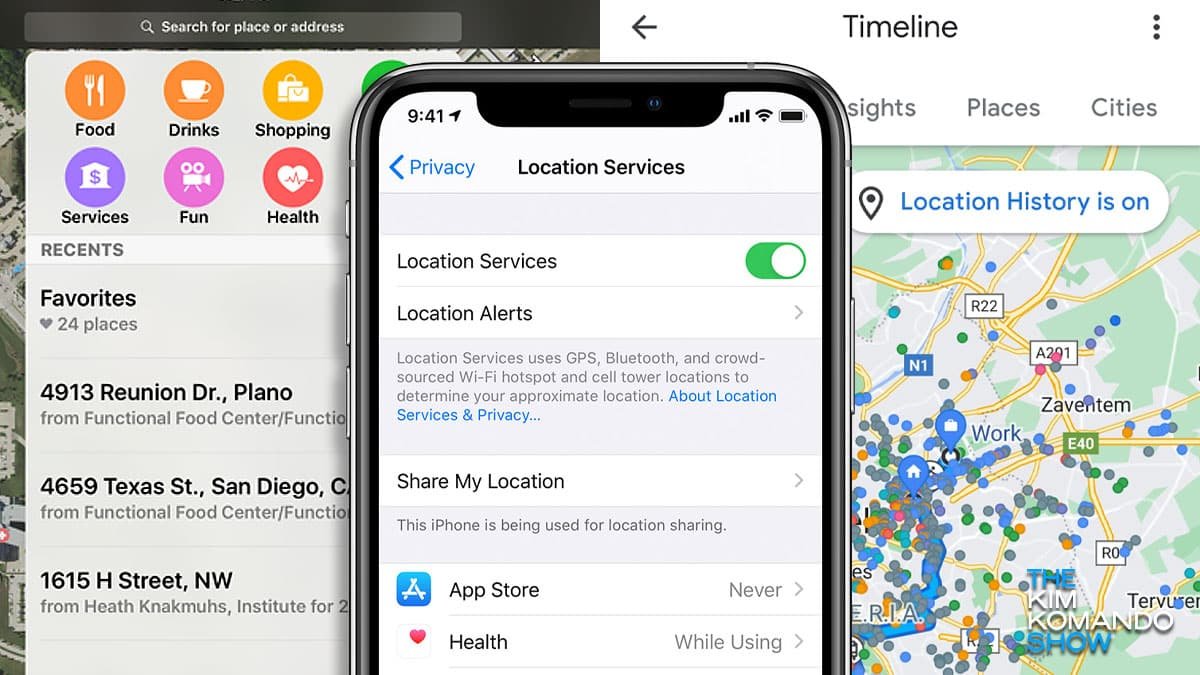
- Go to Settings > Privacy & Security > Location Services.
- Ensure the Location Services toggle is ON.
- Scroll down to the specific app (e.g., Messages, Find My, WhatsApp, Google Maps).
- Tap the app and set its location access to "While Using the App" or, for continuous sharing, "Always." For critical apps like "Find My" or family safety apps, "Always" is usually necessary.
- Also, ensure "Precise Location" is enabled for better accuracy.
- For Android Phones:
- Open Settings > Location.
- Make sure "Use Location" is enabled.
- Tap "App permissions" or "Location permission" (wording varies by Android version).
- Find the problematic app and ensure it has permission to access your location, ideally set to "Allow all the time" for persistent sharing, or "Allow only while using the app" if you prefer more control.
- If permissions were off, enable them, then restart the app.
Step 2: The Classic Reboot (Restart Your Smartphone)
A soft reset is surprisingly effective. It clears temporary glitches, refreshes your phone's memory, and reinitializes all its services. Just turn it off, wait 30 seconds, and turn it back on.
Step 3: Refresh Your Network Connections with Airplane Mode
Toggling Airplane Mode on and off can resolve minor network hiccups without a full restart. This refreshes your cellular, Wi-Fi, and Bluetooth connections, which are all vital for location accuracy.
- Swipe down (Android) or from top-right (iOS) to open Quick Settings/Control Center.
- Tap the Airplane Mode icon to turn it on. Wait 10-15 seconds.
- Tap it again to turn it off.
Step 4: Ensure Wi-Fi and Mobile Data are Active
While GPS satellites pinpoint your general location, your phone relies heavily on Wi-Fi and mobile data signals from nearby towers and hotspots for speed and precision, especially indoors or in urban areas.
- Confirm both Wi-Fi and Mobile Data are switched on in your phone's settings.
- Even if you're not connected to a Wi-Fi network, leaving Wi-Fi enabled allows your phone to use nearby Wi-Fi signals for better location triangulation.
Step 5: Update Your Operating System and the App
Software developers constantly release updates to fix bugs, improve performance, and enhance security. An outdated app or OS is a common source of unexpected behavior.
- Update your OS:
- iOS: Settings > General > Software Update.
- Android: Settings > System > System update (or Software update).
- Update the app:
- iOS: Open the App Store, tap your profile picture, and scroll to see pending updates.
- Android: Open the Play Store, tap your profile picture, go to "Manage apps & device," and check for updates.
Step 6: Reinstall the Problematic App
If updates don't cut it, a clean reinstall can often resolve deeper software corruption or persistent bugs. This completely removes the app and its data, giving you a fresh start.
- Uninstall/Delete the app from your phone.
- Restart your phone.
- Download and reinstall the app from your respective app store.
- Remember to grant all necessary permissions upon setup.
Step 7: Tame Aggressive Battery Saver Modes
Many phones have clever battery optimization features designed to extend battery life. The downside? They often restrict background app activity, which is crucial for real-time location updates.
- For iPhones (iOS):
- Go to Settings > Battery.
- Ensure Low Power Mode is OFF.
- For specific apps, iOS usually manages background refresh intelligently, but a full reset of settings can sometimes help (Settings > General > Transfer or Reset iPhone > Reset > Reset Location & Privacy).
- For Android Phones:
- Go to Settings > Apps > See all apps (or similar).
- Find the problematic location-sharing app.
- Tap "Battery" or "Battery optimization."
- Set it to "Unrestricted" or "Don't optimize." The exact wording varies by phone manufacturer (Samsung, Google Pixel, etc.).
- Also check for "Auto-start" or "Background activity" settings for the app and ensure they are enabled.
Step 8: Enable Background App Refresh (iOS Specific)
For iPhones, "Background App Refresh" allows apps to update their content and, crucially, their location, even when you're not actively using them.
- Go to Settings > General > Background App Refresh.
- Ensure the main toggle at the top is ON.
- Scroll down and ensure the specific location-sharing app is also toggled ON.
App-Specific Solutions: When Universal Steps Aren't Enough
Sometimes, an app has its own unique quirks that require a tailored approach. Here’s how to tackle issues with some of the most popular location-sharing platforms.
Google Maps: Beyond Just Navigation
Google Maps is a powerhouse, but its location sharing can sometimes get a little lost. If you're seeing "Couldn’t get your location" or live location not updating:
- Enable High-Accuracy Mode (Android): In your Android Location settings, look for "Location services" or "Advanced" and ensure "Google Location Accuracy" (or "High accuracy mode") is turned on. This uses Wi-Fi, mobile networks, and GPS for the best possible accuracy.
- Calibrate Your Compass: If your blue dot is pointing the wrong way or spinning, your phone's compass might need recalibration. Open Google Maps, tap your blue location dot, then tap "Calibrate." Follow the on-screen instructions, typically involving moving your phone in a figure-eight motion.
- Refresh Location Sharing:
- Open Google Maps, tap your profile picture (top right).
- Tap "Location Sharing."
- If a shared contact isn't appearing or seems stuck, re-enter this menu to force a refresh.
- To start sharing, tap "Share Location," choose a contact, grant any missing permissions, and set a duration.
- Clear Cache: Persistent issues can be due to corrupted temporary data.
- Go to Settings > Apps > Google Maps > Storage.
- Tap "Clear Cache." (Avoid "Clear Data" unless you're ready to reconfigure the app from scratch, as it will delete saved maps and settings).
- Restart Google Maps.
- Update Google Play Services: Google Maps heavily relies on Google Play Services. Ensure it's up to date via the Play Store.
WhatsApp: Keeping Live Location Lively
WhatsApp's live location feature is great for short-term sharing, but it can stop updating if certain conditions aren't met.
- Reinitiate the Sharing Session: Sometimes, simply stopping and restarting the live location share in the chat can kickstart it.
- Ensure App Runs in Background: As discussed in the universal steps, if WhatsApp is heavily optimized for battery, it might not update in the background. Check your battery optimization settings.
- Internet Stability: Live location requires a stable internet connection. If you're in an area with patchy Wi-Fi or cellular data, updates will be sporadic or cease altogether.
- Time Limit: Remember that WhatsApp live location has a duration (15 minutes, 1 hour, 8 hours). Ensure the session hasn't simply expired.
Find My (Apple): Locating Your Loved Ones (and Devices)
Apple's integrated "Find My" app is essential for tracking devices and family members. If you're seeing "No Location Found" or contacts aren't appearing:
- Verify iCloud Sign-in: Find My is tied to your Apple ID and iCloud. Ensure you're signed into iCloud on your device (Settings > [Your Name]).
- "Share My Location" Toggle:
- Go to Settings > [Your Name] > Find My.
- Ensure "Share My Location" is toggled ON.
- Also check who you are sharing with and from which device if you have multiple.
- Recipient's Permissions: The person trying to locate you must also have allowed you to share your location with them. They should check their "Find My" app settings under "People."
- Time to address why your location wont share for broader context. You can find more comprehensive solutions for general sharing problems in our guide on why your location wont share.
Life360: Circles Staying Connected
Life360 is popular for family safety circles, but members sometimes appear offline or their location lags significantly.
- Disable Battery Optimization (Critical for Android): This is the number one fix for Life360. Go to your phone's Battery settings > Battery Optimization (or similar) and set Life360 to "Unrestricted" or "Don't optimize."
- Enable Auto-Start (Android): Some Android devices (especially Huawei, Xiaomi, OnePlus) have aggressive app management. Go to Settings > Apps > Life360 and look for "Auto-start" or "Launch" settings. Ensure Life360 is allowed to auto-start and run in the background.
- Confirm GPS Accuracy Setting: Inside the Life360 app itself, check settings related to location accuracy. Ensure it's set to "High" or "Precise."
- Check Data Usage: Ensure Life360 is allowed to use mobile data in the background (Settings > Apps > Life360 > Mobile data & Wi-Fi).
Snapchat: Ghost Mode and Snap Map Accuracy
Snapchat's Snap Map can be a fun way to see what friends are up to, but location accuracy or Ghost Mode issues can pop up.
- Clear App Cache: Go to Settings > Apps > Snapchat > Storage and tap "Clear Cache." This often resolves display issues without affecting your memories.
- Toggle Ghost Mode: If your location isn't updating or you're stuck in Ghost Mode, toggle Ghost Mode off and then on again within the Snap Map settings.
- Reinstall if Persistent: If cache clearing and toggling don't work, a full reinstall is the next best step.
Apple Maps: Integrated Location Sharing
While often overshadowed by Google Maps, Apple Maps also offers location sharing.
- Share My Location via Maps:
- Open Apple Maps.
- Tap the blue dot representing your current location.
- Tap "Share My Location."
- Choose the contact(s) you wish to share with.
- Recipient Permission: As with Find My, the recipient needs to have allowed you to see their location.
- Reset Location & Privacy Settings: This is a more drastic step but can resolve deeper permission conflicts. Go to Settings > General > Transfer or Reset iPhone > Reset > Reset Location & Privacy. Be aware this resets all location and privacy permissions for all apps.
- Turn Off Low Power Mode: As mentioned in universal steps, this can hinder real-time updates. Check Settings > Battery.
Diving Deeper: Understanding Location Accuracy and Connectivity
It's easy to blame "GPS failure," but the reality of location sharing is far more nuanced. Understanding these underlying factors can help you troubleshoot more effectively and even prevent issues.
Connectivity is King, Not Just GPS
GPS (Global Positioning System) is indeed what pinpoints your device's geographical coordinates by receiving signals from satellites. However, GPS alone can be slow, especially when initiating a fix, and struggles indoors or in dense urban areas where signals are obstructed.
Modern smartphones use a blended approach:
- Assisted GPS (A-GPS): Uses cellular tower and Wi-Fi data to quickly get an initial GPS fix.
- Wi-Fi Triangulation: Determines your location by measuring signals from nearby Wi-Fi networks. This is excellent for indoor accuracy.
- Cellular Triangulation: Uses the strength and timing of signals from nearby cell towers. Less precise than Wi-Fi or GPS, but provides a broad estimate where other signals are weak.
Takeaway: If you're struggling with location updates, it's often poor data connectivity (weak cellular signal or Wi-Fi), not solely a GPS failure. Ensure your phone has a strong internet connection.
Battling Inaccurate Location Readings
"My dot is miles away!" is a common complaint. This usually stems from:
- Weak GPS Signal: Being indoors, underground, or surrounded by tall buildings ("urban canyons") can severely degrade GPS signal quality.
- Disabled "High Accuracy" Mode (Android): Make sure your Android device is set to use all available location sources (GPS, Wi-Fi, cellular) for the best possible accuracy.
- Wi-Fi Off: Even if you don't connect to Wi-Fi, keeping it on allows your phone to scan for nearby networks to improve location.
- Compass Interference: Magnets (phone cases, car mounts) can interfere with your phone's internal compass, leading to inaccurate directional data, which can confuse mapping apps.
Pro Tip: If you're repeatedly getting inaccurate readings, try walking outside into an open area for a few minutes. Allow your device to get a solid GPS lock, which can help recalibrate its internal sensors. Moving around a bit can also help it adjust.
Managing Battery Drain for Location Sharing
Constant location sharing will consume more battery. There's no way around physics. However, you can manage it:
- Use Time-Limited Sharing: Many apps allow you to share for a set duration (e.g., 1 hour). Use this feature instead of open-ended sharing when possible.
- Keep the Screen Off: The screen is one of the biggest power consumers. Once you've initiated sharing, turn off your screen.
- Avoid Running Multiple Location-Based Apps Simultaneously: Running Google Maps for navigation and Life360 and Snapchat Map at the same time will drain your battery significantly faster. Close apps you don't actively need.
- Charge Above 20%: Many phones trigger aggressive power-saving modes when the battery drops below 20%, which can limit background location updates.
The Hard Truth: A Phone Off Means No Location
This might seem obvious, but it's often overlooked when trying to locate a loved one whose phone has died or been turned off. Location sharing requires:
- The device to be powered on.
- The device to be connected to a network (cellular or Wi-Fi) to transmit its location data.
If either of these conditions isn't met, real-time updates cease, and the last known location will be shown (or "No Location Found").
Proactive Measures: Preventing Location Sharing Headaches
Prevention is always better than a frantic troubleshooting session. Adopt these best practices to keep your location sharing smooth and reliable.
- Schedule Regular App Updates: Make it a habit to check for and install app updates weekly. Enable automatic updates where possible. This ensures you always have the latest bug fixes and performance improvements.
- Test Sharing Weekly: With a trusted friend or family member, perform a quick location share test once a week. This helps catch potential problems early, before they become critical.
- Keep Your Phone Charged Above 20%: Especially during travel or when you anticipate needing location services, maintain a good charge. Low battery triggers aggressive power-saving, which can interrupt location services.
- Use Wi-Fi Whenever Possible: Connecting to Wi-Fi not only conserves mobile data but also significantly improves location accuracy, especially indoors.
- Disable Unnecessary Battery Optimizations: For your primary location-sharing apps (e.g., Maps, WhatsApp, Find My, Life360), ensure they are exempt from aggressive battery-saving measures.
- On iPhones, Enable "Precise Location": For enhanced accuracy, navigate to Settings > Privacy & Security > Location Services > [App] and ensure "Precise Location" is enabled.
- Calibrate Location Services Periodically: If you notice consistent inaccuracy, take your device outside to an open area and let it acquire a solid GPS signal. Move around gently for a minute or two. This helps your phone's internal sensors re-align.
- Consider Booting Android in Safe Mode: If you suspect a third-party app is interfering with location services, booting your Android device in Safe Mode (which loads only essential system apps) can help diagnose. If location works perfectly in Safe Mode, you know a downloaded app is the culprit.
- Contact Customer Support: If you've tried everything and the problem persists, it might be an issue specific to your device or a more complex bug. Don't hesitate to reach out to Apple Support, Google Support, or the specific app's support team. They have advanced diagnostic tools and can provide tailored advice.
Common Questions and Misconceptions About Location Sharing
Let's clear up some lingering doubts and common misbeliefs.
"Why does my location jump around sometimes?"
This usually happens in areas with weak or inconsistent GPS signals (like dense urban areas or indoors), where your phone switches between GPS, Wi-Fi, and cellular triangulation. Each method has varying degrees of accuracy, causing your location dot to "jump" as the phone gets a new, better, or different fix.
"Does turning off location services save a lot of battery?"
While it does save some battery, the impact might be less significant than you think, especially compared to screen usage or intensive apps. Modern phones are efficient. The biggest drain comes from active navigation or apps constantly requesting high-accuracy location in the background. Simply having Location Services on but no app actively using it won't drastically drain your battery.
"Can I share my location if I don't have mobile data?"
Yes, but with limitations. If you have Wi-Fi access, your phone can use Wi-Fi for both internet connectivity (to send your location) and Wi-Fi triangulation (for accuracy). However, if you have neither mobile data nor Wi-Fi, your phone can still get a GPS fix, but it won't be able to transmit that location to anyone. So, while your phone knows where it is, it can't share it.
"Is 'Precise Location' a privacy risk?"
"Precise Location" (on iOS) or "High Accuracy Mode" (on Android) gives apps your exact location, which is necessary for accurate navigation or real-time sharing. If you're concerned about a specific app having too much detail, you can switch it to "Approximate Location" (iOS) or rely solely on GPS (Android, less accurate). For trustworthy apps and critical sharing, precise location is generally safe, but always be mindful of who you're sharing with and for how long.
Stay Connected, Stay Safe: Your Path to Reliable Location Sharing
Location sharing should be a seamless tool that enhances your safety and convenience, not a source of frustration. By systematically working through these troubleshooting steps, understanding the underlying technology, and adopting proactive habits, you can regain control over your location data and ensure your apps are working precisely when you need them most.
Remember, technology is designed to serve us. When it misbehaves, a little informed detective work can often put everything back on track. Now, go forth and share your location with confidence!